- Turning big ideas into great products
- +91-9036658827

Gantry Crane vs EOT Crane: Which Is Better for Your Industry?
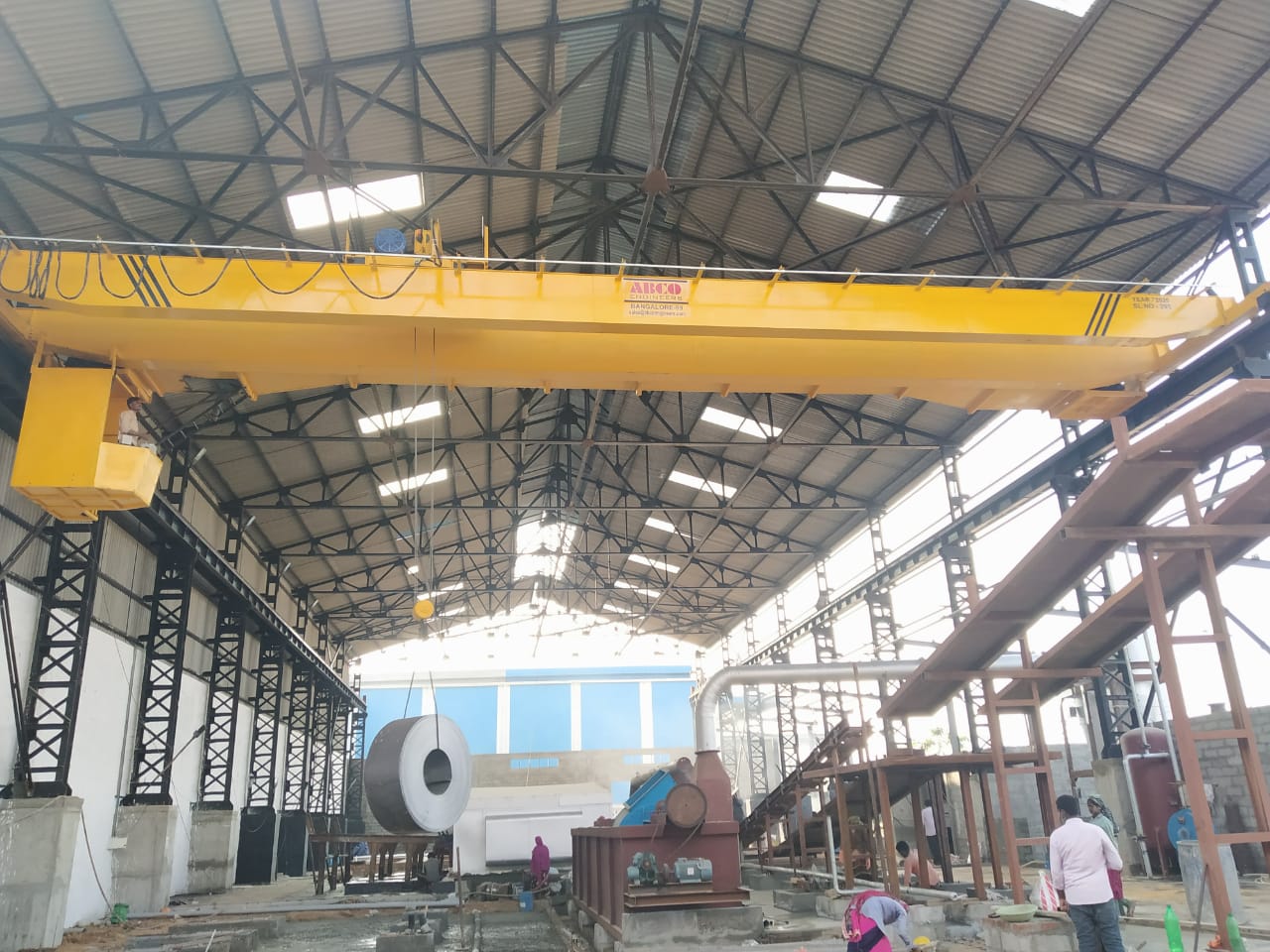
Gantry Crane vs EOT Crane: Which Is Better for Your Industry?
Material handling is an essential part of modern industrial operations. Whether it is a manufacturing facility, warehouse, fabrication unit, engineering plant, construction site, or heavy-duty production environment, the right lifting equipment can significantly improve productivity, safety, and operational efficiency. Among the most widely used industrial lifting solutions are gantry cranes and Electric Overhead Travelling (EOT) cranes.
Although both crane systems are designed to lift and move heavy materials, their structures, installation requirements, operating environments, and applications are different. Choosing between them depends on factors such as available space, building structure, load requirements, working area, span, and the nature of the industry.
ABCO Engineers provides reliable and application-focused crane solutions designed to meet the diverse material handling requirements of industrial businesses. Understanding the difference between gantry and EOT cranes can help businesses select the right system for their operations.
Understanding EOT Cranes
An EOT crane is an overhead lifting system that generally consists of a bridge, end carriages, hoisting mechanism, and electrical travelling system. The crane operates along elevated runways installed within an industrial building or workshop. This allows heavy materials to be lifted vertically and moved horizontally across the working area.
EOT cranes are particularly suitable for factories, workshops, warehouses, engineering facilities, and production units where a permanent overhead crane system is required. Since the crane operates above the floor level, it can utilize the available floor space efficiently while allowing workers and other equipment to operate below it.
Businesses looking for EOT Crane Manufacturers Bangalore can consider suppliers that understand the specific requirements of local industries and can provide solutions based on building dimensions, load capacity, span, lifting height, and operational requirements.
Understanding Gantry Cranes
A gantry crane is a lifting system supported by legs that run along rails or a suitable floor-mounted track. Unlike an EOT crane, a gantry crane does not necessarily require the building structure to support the crane runway. This makes it a practical option for outdoor yards, construction areas, storage facilities, fabrication units, and industrial locations where an overhead runway may not be available.
Gantry cranes can be designed in different configurations depending on the application. They can be used for handling steel sections, machinery, containers, fabrication components, raw materials, and other heavy loads.
For companies searching for Gantry Crane Manufacturers Bangalore, choosing an experienced manufacturer is important because crane configuration, structural design, operating environment, and load requirements can vary significantly from one application to another.
Gantry Crane vs EOT Crane: Which Is Better?
There is no single answer to which crane is better because the ideal choice depends on the application. EOT cranes are generally preferred when the facility has a suitable building structure and requires frequent movement of materials within a defined indoor working area. Gantry cranes, on the other hand, can be advantageous where the crane needs to operate outdoors or where installing an overhead runway is difficult or impractical.
An EOT crane can provide efficient use of floor space because the supporting structure and travelling mechanism are positioned above the working area. This can be particularly beneficial in manufacturing environments where floor space is valuable.
A gantry crane provides greater flexibility in locations where there is no suitable overhead supporting structure. Its independent legs allow it to operate across outdoor yards and open industrial spaces. Depending on the design, gantry cranes can also be relocated or modified to suit changing operational requirements.
The decision should therefore be based on the facility layout, type of material being handled, frequency of lifting, available infrastructure, required lifting height, and overall operating conditions.
Single Girder EOT Crane for Efficient Material Handling
Among the different EOT crane configurations, single girder cranes are widely used for applications involving moderate lifting requirements. A single girder EOT crane generally consists of one main bridge girder with a hoisting and travelling mechanism. Its relatively compact design can make it suitable for workshops, warehouses, production areas, maintenance facilities, and other industrial applications.
Businesses searching for Single Girder EOT Crane Bangalore solutions should evaluate the required safe working load, span, lifting height, duty classification, operating frequency, and available headroom before selecting a crane.
Single girder EOT cranes can offer a practical balance between performance and investment for applications that do not require the higher lifting capacities associated with heavy-duty double girder systems. The appropriate configuration should always be selected according to the actual material handling requirements of the facility.
Industrial Gantry Cranes for Outdoor and Heavy-Duty Applications
Industrial gantry cranes are particularly useful where materials need to be moved across open yards, storage areas, fabrication facilities, or construction environments. Their supporting legs allow the crane to function independently from the building structure, making them suitable for applications where an overhead runway cannot be installed.
When choosing Industrial Gantry Crane Suppliers Bangalore, businesses should consider more than just the lifting capacity of the crane. Structural design, wheel arrangement, travelling mechanism, hoisting speed, environmental conditions, operating frequency, and safety features all influence the performance and reliability of the system.
A properly designed gantry crane can simplify the movement of heavy materials while improving workflow and reducing dependence on manual handling. This can be especially valuable in industries where large and heavy components must be frequently transported between different working areas.
Crane Load Capacity and Span
Two of the most important factors when selecting any industrial crane are crane load capacity and span. Load capacity refers to the maximum weight that the crane is designed to safely lift, while span generally refers to the distance between the crane's supporting points or the runway rails across which the bridge operates.
The required load capacity should be determined by considering the heaviest material that needs to be lifted during normal operations. It is important not to select a crane solely based on average load requirements. Future production needs, occasional heavy loads, and the operating environment should also be considered during the design stage.
Span is equally important because it determines the width of the working area that the crane can cover. A properly selected span ensures that the crane can reach the required material handling points without unnecessary structural or operational limitations.
The relationship between load capacity, span, lifting height, duty cycle, and building structure plays an important role in determining the appropriate crane configuration. Professional assessment and engineering design can help ensure that the crane is suitable for the intended application.
Choosing the Right Crane for Your Industry
Selecting between a gantry crane and an EOT crane requires an understanding of the complete material handling process. Indoor manufacturing facilities with suitable structural support may benefit from an EOT crane, while outdoor yards and open industrial areas may find gantry cranes more practical.
The type and frequency of loads, available floor and headroom space, building structure, operating environment, required travelling distance, lifting height, and future expansion plans should all be considered before finalizing the crane.
A reliable crane manufacturer should also be able to understand the operational requirements and recommend a configuration rather than simply offering a standard product. Proper engineering, installation, testing, maintenance, and after-sales support are essential for achieving long-term crane performance.
Why Choose ABCO Engineers?
ABCO Engineers focuses on providing industrial crane solutions designed around the specific requirements of each application. From selecting the appropriate crane configuration to considering load requirements, span, lifting height, and operating conditions, a customized approach can help businesses achieve safer and more efficient material handling.
Whether the requirement is for an overhead crane system for an indoor facility or a gantry crane for an outdoor industrial application, the right engineering approach can make a significant difference in productivity and reliability.
With the right crane system in place, industries can streamline material movement, reduce manual handling, optimize available space, and create a more efficient working environment.
Conclusion
Both gantry cranes and EOT cranes offer valuable advantages for industrial material handling, but their suitability depends on the specific requirements of the facility. EOT cranes are an effective choice for many indoor industrial environments where overhead runways are available, while gantry cranes provide flexibility for outdoor and open-area applications.
Factors such as load capacity, span, lifting height, operating frequency, building structure, and working environment should be carefully evaluated before making a decision. By working with an experienced manufacturer such as ABCO Engineers, businesses can identify a crane configuration that matches their operational requirements and supports safe, dependable, and efficient material handling.
The right crane is not simply a lifting machine; it is an important part of an industry's overall productivity and workflow. Choosing the appropriate system today can help businesses handle materials more efficiently and prepare their operations for future growth.